
Probate Is Handled in Lincoln County Chancery Court
Lincoln County does not have a separate probate court. Probate matters are heard in Chancery Court, the state equity court that also handles divorce, custody, land disputes, and adoptions. The day-to-day records work falls to the Chancery Clerk, Alisha McGehee, whose office is in Room 111 of the courthouse at 301 S First Street in Brookhaven. The office phone is 601-835-3411.
Because probate lives inside Chancery Court, there is no "probate clerk" to call by that title. The Chancery Clerk is clerk of the Chancery Court and the public recorder for the county. The 15th Chancery District chancellor, Joseph Durr, presides over these cases. Estates and guardianships filed here follow Mississippi equity procedure, and the clerk keeps the resulting file.
The same office wears several hats, which is why probate sits beside other county functions. The Chancery Clerk is clerk of the Board of Supervisors, county treasurer, and public recorder for deeds, mortgages, liens, and similar instruments. That recorder role matters for estates, since property a decedent owned is documented in the very records this office keeps. When an estate transfers land, the deed is recorded here too, so a single matter can leave a trail across both the probate file and the recorded land index.
What Lincoln County Probate Covers
Probate in Lincoln County is broader than wills alone. The Chancery Court and Chancery Clerk handle a range of estate and protective matters, many of which involve property, minors, or people who need help managing their affairs. The categories below all run through this one court.
- Estates of people who have died, with or without a will
- Wills and full estate administration
- Guardianships of minors or incapacitated adults
- Conservatorships for managing property and finances
- Insurance settlements paid to minors
- Commitments and other protected-person proceedings
- Land and title questions tied to an estate or to equity
Trust and equity disputes can also land in Chancery Court when they are filed there. The common thread is that these cases need a court of equity to supervise property, protect a vulnerable person, or transfer assets after a death.
Probate Terms Defined
Probate paperwork uses words that rarely come up elsewhere. A short glossary makes the filings easier to read. These terms appear throughout estate, guardianship, and conservatorship cases in Chancery Court.
- Testator
- The person who made the will being presented for probate.
- Executor
- The person named in a will to carry out its terms and settle the estate.
- Intestate
- Dying without a valid will, which means the estate passes under state law and an administrator is appointed.
- Administrator
- The person the court appoints to manage an estate when there is no will or no named executor.
- Guardianship
- A Chancery proceeding appointing someone to care for a minor or an incapacitated adult.
- Conservatorship
- A Chancery proceeding to manage the property and finances of a protected person.
Knowing these roles helps when you read a docket. The same file may name a testator, an executor, and the heirs, while a guardianship file names a guardian and a ward instead.
How to Search Lincoln County Probate Records
There is no single free portal that returns a complete probate docket for the county. The most reliable route starts with the Chancery Clerk and uses the names and dates you already know. The steps below move from the clerk to the online tools and back to the counter for copies.
- Start with the Chancery Clerk, using the decedent or ward name, an approximate filing year, the estate or cause number if known, and the document you want.
- Check Mississippi Electronic Courts for e-filed Chancery case information when it is available to you, or use a courthouse public terminal.
- Use the Chancery land and instrument search for deeds, liens, and recorded papers tied to an estate, but do not treat it as the full probate docket.
- Request copies or certified copies from the Chancery Clerk by phone, in person, fax, email, or mail as office procedure allows.
- Expect restricted access when a file involves minors, mental-health commitments, sealed documents, or adoption.
The Chancery Clerk's online search landing page hosts the county's recorded-document tools. You can reach it through the Chancery search landing page, which also explains the login requirement for scanned images.
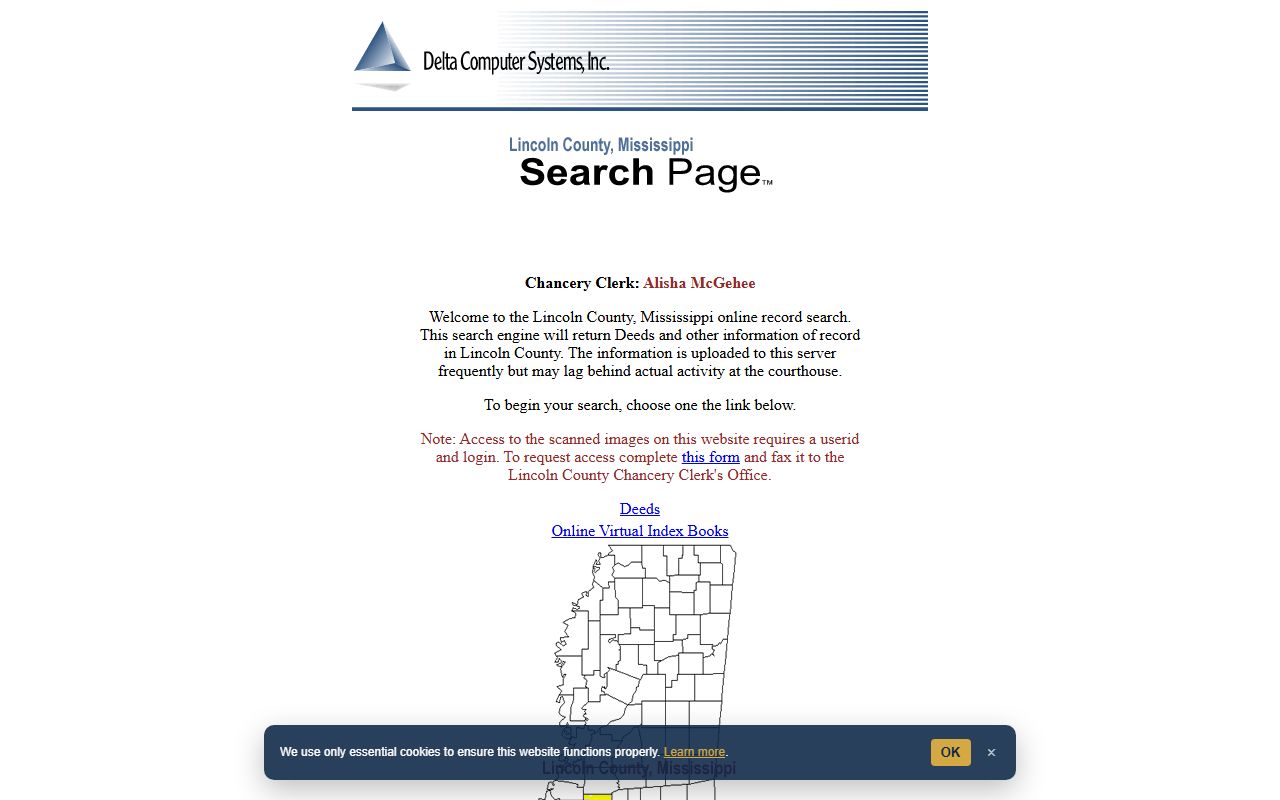
This landing page is the gateway to the land and instrument index, not to full estate case files. For the probate file itself, the clerk's counter remains the controlling source.
The Chancery Court and Chancery Clerk
One office anchors probate in Lincoln County, so it helps to have its contact details in one place. The Chancery Clerk records official minutes, serves as county recorder, and acts as clerk of the Chancery Court for estates and guardianships. The official county page describes the office as one of the most diverse in Mississippi government.
You can review the office duties on the official Chancery Clerk page, which lists the current clerk and the court's role over estates and equity. The screenshot below shows that official page for Lincoln County.
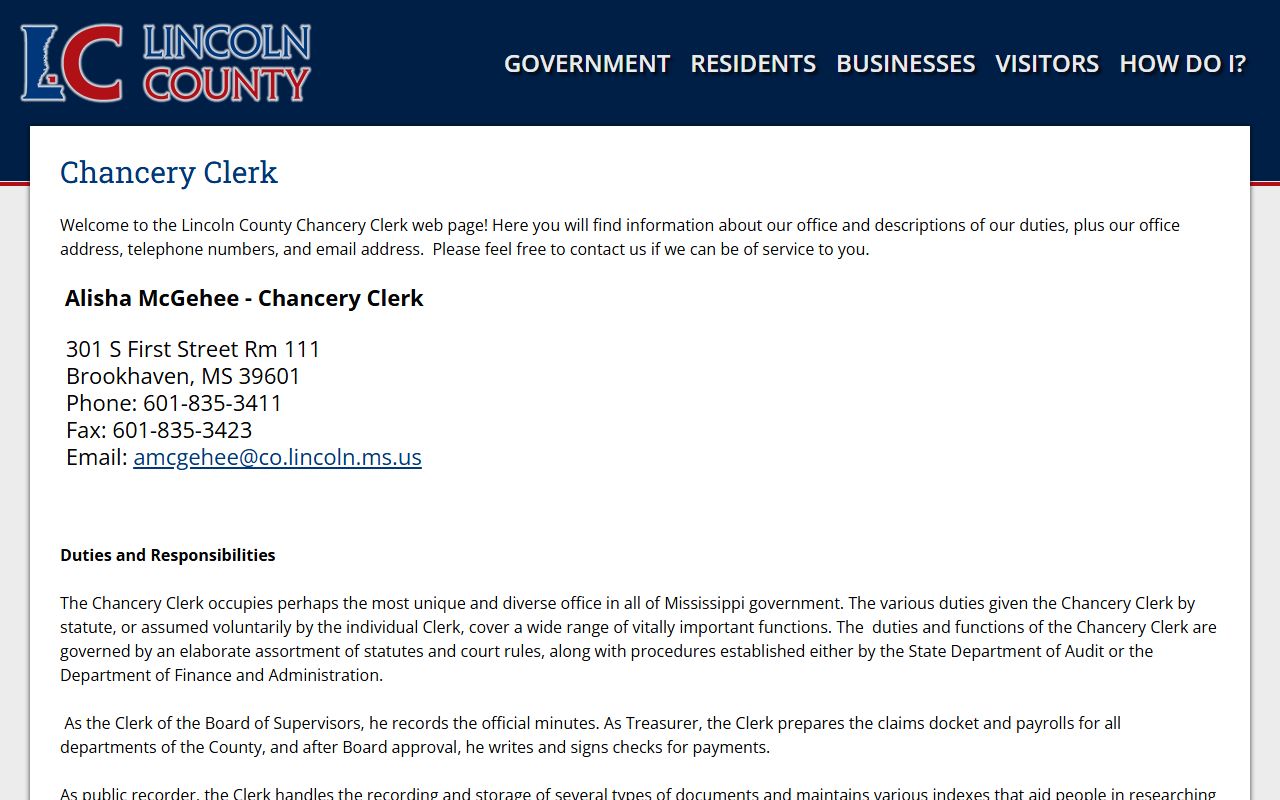
For deeper office detail, the Lincoln County Chancery Clerk overview covers recording, treasurer, and board duties alongside probate. The contact card below has what you need to call or visit.
Lincoln County Chancery Clerk
301 S First Street, Room 111
Brookhaven, MS 39601
601-835-3411
Mon–Fri 8 a.m.–5 p.m.
Lincoln County Chancery Land Records and Estates
Estates often involve real property, so the Chancery land and instrument search can support a probate inquiry. It will not show the full estate docket, but it can surface deeds, liens, and other recorded papers connected to a decedent or an estate representative. The fields below are the ones most useful when tracing estate property.
| Field | Type | Required | Notes |
|---|---|---|---|
| Grantor or Grantee (last first) | Text | Optional | Search a decedent, heir, estate representative, or buyer and seller name. |
| Book / Page | Text pair | Optional | Use deed and book citations from probate filings. |
| Filing Date | Date | Optional | Entered as mm/dd/yyyy. |
| Instrument Number | Text | Optional | Exact instrument lookup. |
| Use Refinements | Radio | Optional | Yes or No; refinements apply to name searches. |
| Instrument Type | Lookup | Optional | Opens a "find types" list. |
| Filing Date Range | Date range | Optional | Search from one date to another. |
The deed and instrument search shows these fields in full. The capture below illustrates the recorded-document search the county provides.
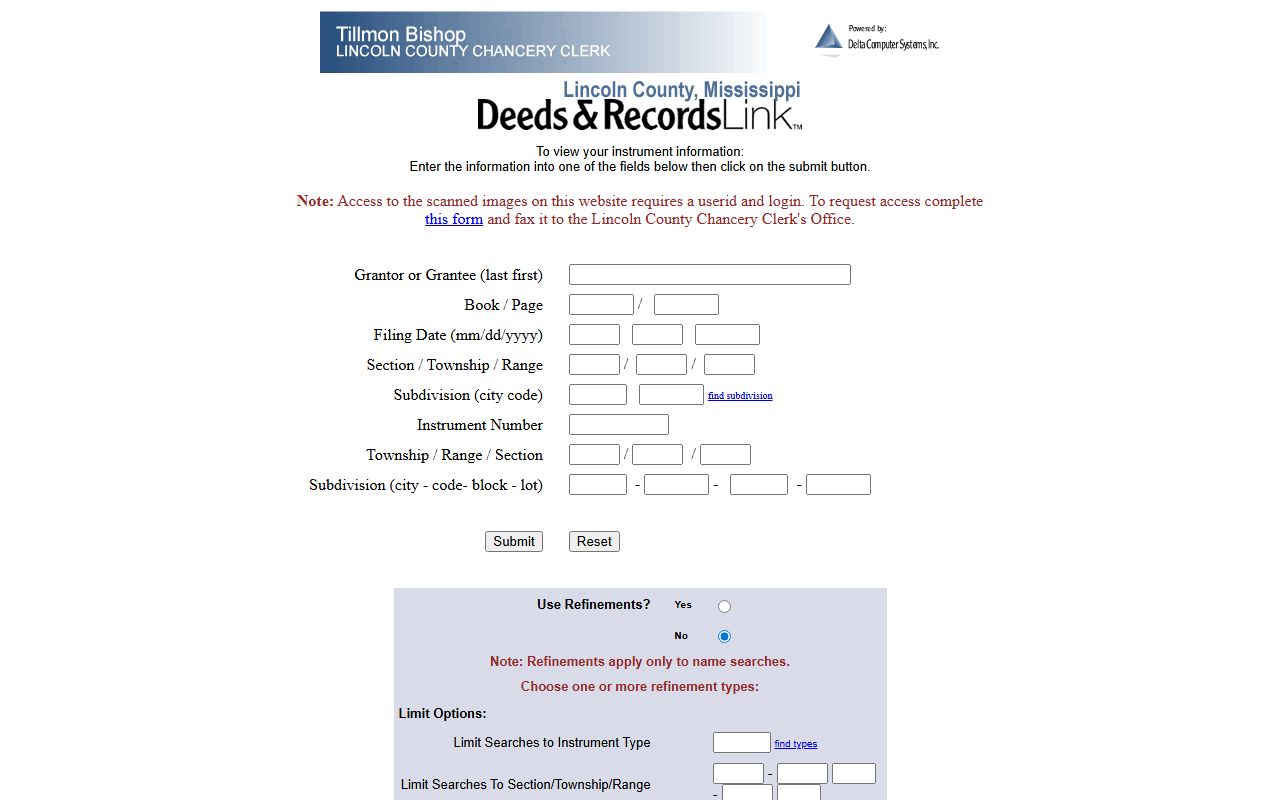
Note: The land search index is public, but scanned images require a user ID and login requested through a form faxed to the Chancery Clerk's office.
How Estate Administration Works in Lincoln County
Settling an estate follows a predictable arc in Chancery Court, even when the details differ from case to case. The walkthrough below shows the typical path from the first filing to the final distribution. An attorney is common when there is property, a contest, or a protected person.
- A family member, nominated executor, creditor, or interested person files a petition or application in Chancery Court.
- If there is a will, it is presented for probate; if there is none, administration proceeds by intestacy.
- The chancellor may appoint an executor, administrator, guardian, or conservator and issue documents granting authority.
- Notices go to heirs, beneficiaries, creditors, or interested parties when required.
- The estate representative gathers assets, pays lawful debts, and files inventories or accountings if required.
- Real-property transfers may create recorded deeds or instruments in the Chancery Clerk land records.
- Minor settlements, guardianships, and conservatorships receive closer oversight and may have restricted details.
- A final accounting and distribution closes the estate once the court approves it.
Because estate property can be sold or transferred along the way, a single matter may leave traces in both the probate file and the recorded land index. Checking both gives a fuller picture of what happened.
The Lincoln County Probate Fee Gap
There is an honest limit to report here. No probate-specific Lincoln County Chancery fee schedule was located in official online sources. The Circuit Clerk publishes a fee sheet, but those amounts cover Circuit Court services and do not automatically apply to Chancery probate filings.
Rather than guess at numbers, plan to confirm costs directly with the office. Call the Chancery Clerk at 601-835-3411 for current filing fees, copy charges, and certified-copy costs before you file or mail a request. Marriage, divorce, and other family matters share this courthouse, and the related Lincoln County marriage and divorce records page explains where those records and their fees live.
Restricted Lincoln County Probate Records
Not all probate matters are fully open. Files that involve minors, such as guardianships and minor settlements, receive closer court oversight and may shield sensitive details. Mental-health commitments handled in Chancery Court contain medical information and are treated as restricted or partly sealed.
Adoption is also heard in Chancery Court, but adoption files are not ordinary public case files and require court authority or statutory eligibility to view. Sealed documents and protected identifiers, including Social Security numbers and dates of birth, may be redacted from otherwise public records. When a probate file touches any of these areas, route the request through the Chancery Clerk and expect access to be limited.