
Criminal Court Records in Lincoln County
A Lincoln County criminal court record is the official case file the court clerk opens once a prosecutor files formal charges against a defendant. It differs from the arrest entry on a jail roster. Where the roster captures a booking, the criminal court record captures the prosecution itself: the charging document, the arraignment, every motion and order, the plea or verdict, the disposition, and the sentence. Felony case files are kept by the Circuit Clerk, who receives criminal filings, issues process, draws juries, and maintains judgments for the 14th Circuit Court. The Circuit Clerk's online landing page warns that posted information can lag behind courthouse activity and that the official courthouse record controls when the two differ.
Several courts handle criminal matters in Lincoln County, and the level of the offense decides which one holds the file. Justice Court, located on South 2nd Street in Brookhaven, hears county misdemeanors, DUIs, and county ordinance violations, and it conducts the initial appearance and affidavit stage of felony cases. Brookhaven Municipal Court handles city ordinance and misdemeanor matters. Circuit Court is the general-jurisdiction trial court for felony prosecutions, jury trials, and appeals from the lower courts. A felony arrest usually begins in Justice Court for an initial appearance, then moves to Circuit Court by grand jury indictment or bind-over, which is the point where the formal criminal court case file takes shape.
How to Search Lincoln County Criminal Court Records
There is no single free county portal that returns every criminal case document. Circuit Court felony filings move through Mississippi Electronic Courts, the statewide e-filing system that went live for the Lincoln County Circuit Court on February 22, 2021. The Circuit Clerk's Delta Computer Systems landing page is mostly a local index and disclaimer, and it notes that judgment roll, civil, and criminal cases are now filed through Mississippi Electronic Courts. Remote document viewing through that system can require a registered account and a per-page fee, while public terminals at the courthouse remain the free in-person alternative.
- Decide which court holds the case. Felony prosecutions and indictments point to Circuit Court and the Circuit Clerk; misdemeanors and DUIs point to Justice Court or Brookhaven Municipal Court.
- Search by the defendant's full name or by the case or cause number if you already have it, since Mississippi captions use a cause number.
- Narrow the results by court, case type, and filing date to separate the right defendant from others with similar names.
- Open the case to read the docket, the charge list, and the disposition, then note the judge and the hearing history.
- Request a certified copy from the Circuit Clerk in Room 205 when you need an official document, because the courthouse file controls over any online copy.
For a statewide picture, criminal histories and state corrections records sit in separate systems. Once a defendant is sentenced to a prison term, custody and the inmate record move to the Mississippi Department of Corrections. Charge-level detail before indictment, including what a prosecutor first filed, is covered on the Lincoln County arrest records and charges page.
Stages of a Lincoln County Criminal Case
A criminal case moves through a predictable set of stages, and each one leaves a mark in the court record. Reading a file in order, from the charging document to the sentence, shows where a case stands and what is left to happen. The path below traces a felony from the point charges are filed through the sentence imposed by the Circuit Court.
Case flow: Charges Filed › Arraignment › Pretrial / Omnibus › Plea or Trial › Disposition › Sentencing
| Stage | What Happens |
|---|---|
| Arraignment | The court formally reads the charges and the defendant enters a plea. A waiver of arraignment may be filed, and appointed counsel can be requested through an affidavit of indigency. |
| Pretrial / Omnibus | An omnibus order sets procedural deadlines, discovery exchanges, and motion practice. Bond conditions, suppression motions, and continuances are recorded here. |
| Plea or Trial | The case resolves by a negotiated plea or proceeds to a jury trial, since most Circuit Court cases are heard by juries. Pleas, verdicts, and trial orders enter the file. |
| Sentencing | After a guilty plea or conviction, the judge imposes a sentence that can include incarceration, probation, restitution, fines, and court costs, all entered in the judgment. |
What a Lincoln County Criminal Court Record Shows
A criminal case file is built from many fields, and each one answers a different question about the prosecution. Mississippi court papers use a cause number as the master identifier, name the State of Mississippi against the defendant, and record the assigned judge and counsel of record. The docket lists every event in order, from the indictment and arraignment through motions, hearings, and the final judgment. The fields below appear across most Lincoln County criminal court records.
| Field | What It Shows |
|---|---|
| Case Number | The cause number that identifies the file and ties every document and docket entry to one prosecution. |
| Defendant | The accused person, listed as the defendant against the State of Mississippi. |
| Charges | The offense description and, where shown, the charge level, plus the charging document such as an indictment or information. |
| Plea | The defendant's formal response, such as guilty, not guilty, or no contest, and any later changes. |
| Disposition | The current or final outcome of each charge, including dismissal, acquittal, conviction, or a deferred resolution. |
| Sentence | The penalty imposed on conviction, which may combine confinement, probation, restitution, fines, and court costs. |
Other fields appear as well, including the arresting agency, bond amount or a denied-bond entry, and hearing dates. Sensitive identifiers are redacted, so Social Security numbers, financial account numbers, and the names of minors are kept out of public view.
Charges vs. Convictions
A criminal court record will often show charges that never led to a conviction, and reading the two as the same thing is a common mistake. A charge is an accusation supported by probable cause; a conviction is the outcome reached only after a guilty plea or proof beyond a reasonable doubt. The same file can hold counts that were dropped, dismissed, reduced, or resolved by acquittal alongside counts that ended in a finding of guilt. The District Attorney for the 14th District, Brendon Adams, prosecutes felony cases bound over from the lower courts, and the charges a grand jury or prosecutor files can shift before any verdict is reached.
| Charge | Conviction | |
|---|---|---|
| Stage | Accusation | Verdict or plea |
| Burden of Proof | Probable cause | Beyond reasonable doubt |
| Public Record | Yes | Yes |
Reading Dispositions, Sentences, and State Custody
The disposition is the heart of a criminal court record because it states how each charge ended. Common entries include guilty, not guilty, dismissed, nolle prosequi, and deferred or alternative resolutions such as participation in the 14th Circuit Drug Court, which serves the same district as Lincoln County and marked its 25th year in 2024. The sentence then sets the penalty: incarceration, probation, restitution, fines, and court costs, often in combination. When the sentence carries a prison term, the case does not end in the county. Once a defendant is sentenced to state prison, criminal custody moves to the Mississippi Department of Corrections, and the inmate record continues there rather than on the county jail roster.
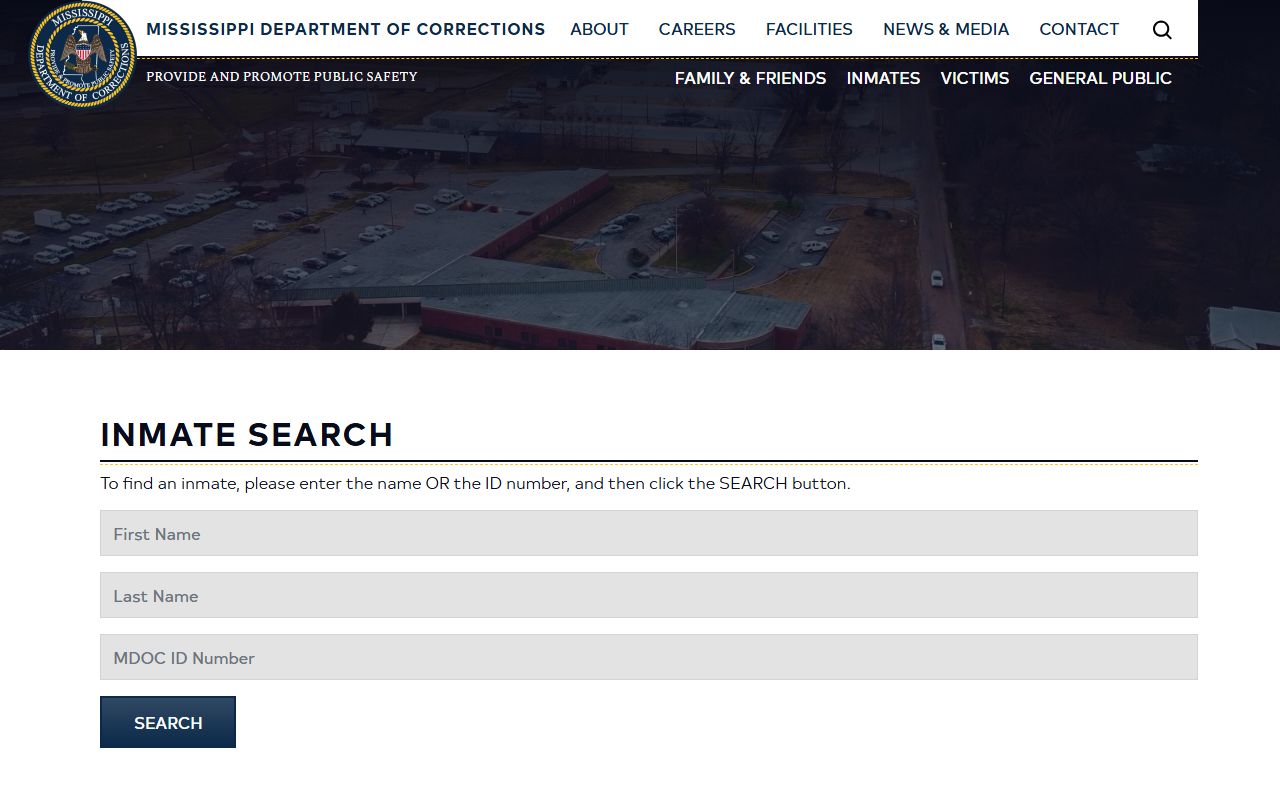
The state corrections agency publishes an inmate search that locates people in its custody. A lead-in path to that tool is the Mississippi Department of Corrections inmate search, which accepts a first name, last name, or an assigned identification number.
That search is useful after sentencing because the county roster only reflects people held at the local detention center pretrial or on short holds. For records questions the inmate search cannot answer, the agency keeps a dedicated office: questions can be routed through the Mississippi Department of Corrections contact page, which lists the records department and offender-record contacts.
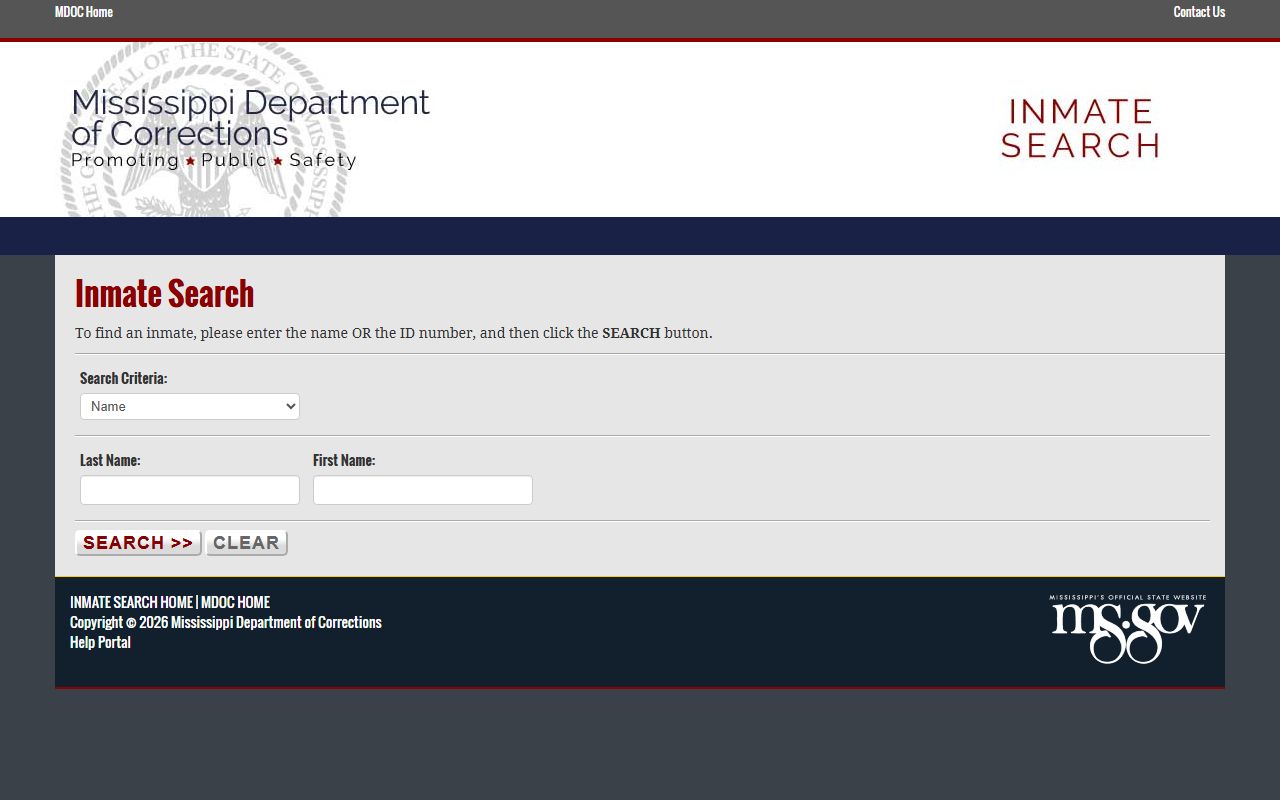
The state also runs a parallel interface through its official services portal. A second route to the same data is the ms.gov MDOC inmate search, which uses a radio choice for searching by name or by identification number, then a last name, first name, and identification field.
Reading the disposition together with the sentence and the state custody record gives the fullest picture, since the case file shows how a charge resolved while the corrections search shows where a sentenced person actually is.
Sealed vs. Expunged Records
Not every criminal court record stays open forever. Mississippi allows qualifying records to be expunged, which removes them from public access, and the distinction between a sealed file and an expunged one matters. A sealed record is hidden from ordinary public view but still exists and can be reached by limited authorized parties. An expunged record is treated, for most purposes, as though the matter never occurred. A Lincoln County expunction begins in the court that handled the arrest, charge, or conviction, whether that is Justice Court, Municipal Court, or Circuit Court, and the petitioner typically files under Mississippi Code Section 99-19-71, identifying the case, the disposition, and the statutory basis.
| Sealed | Expunged | |
|---|---|---|
| Visibility | Hidden from public | Destroyed / treated as never existed |
| Law Enforcement | Limited access | Very limited |
| Eligibility | Court order in cases such as juvenile, sensitive, or protected matters | Dismissed, dropped, no-disposition, or not-guilty cases, certain first-offender misdemeanors, and one qualifying nonviolent felony, subject to exceptions and waiting periods |
Eligibility is set by statute and depends on the charge, the outcome, any prior record, and applicable waiting periods, and public officials are not eligible for official-duty convictions. Once a judge grants an order, certified copies may need to go to the arresting agency, the clerk, the jail, and state repositories so the public indexes are updated. An order controls the official record, but it cannot force private websites to delete a copy automatically.
Public Access to Lincoln County Criminal Court Records
Mississippi treats most government records as open, and criminal case files generally fall within that openness unless a law or court rule makes a record confidential. Access starts with the office that holds the record, which for Circuit Court felony files is the Circuit Clerk, and for lower-court matters is the Justice Court or Brookhaven Municipal Court clerk. Court-file inspection follows court procedure rather than ordinary agency practice, and online portals are convenience copies that can lag behind the official courthouse file.
Key Statutes:
Mississippi Code § 25-61-1 et seq. - the Public Records Act makes public records generally available for inspection unless a law makes them exempt or confidential.
Mississippi Supreme Court Public Records Policy - judiciary record access is governed by the court's openness policy and court procedures, not only ordinary agency practice.
Background Check Considerations
Looking up a criminal court record for personal knowledge is not the same as running a background check for employment, housing, or credit. Those regulated uses fall under the federal Fair Credit Reporting Act and must run through a licensed consumer reporting agency that follows accuracy and notice rules. A casual lookup at the courthouse or through a public portal can be incomplete, can omit later dispositions, and can confuse people who share a name, so an official certified copy from the Circuit Clerk remains the reliable source for any formal decision.
Important: This site is not a consumer reporting agency under the Fair Credit Reporting Act, and its information may not be used for credit, employment, tenant, or insurance decisions.
Restricted Criminal Court Records in Lincoln County
Some criminal matters are kept out of public view entirely. Youth Court cases involving delinquency, children in need of supervision, and abuse or neglect are generally confidential under Mississippi law and do not follow the adult access path. Sealed indictments, active search warrants, and sensitive victim information may also be withheld, and records that a judge has expunged are no longer treated as open. An outstanding warrant tied to a criminal case may surface separately on the Lincoln County warrant records page rather than in the public case file. When a record appears restricted, the Circuit Clerk or the court that holds the file can explain whether access requires a court order or statutory authority.